Sculpture
Available Works
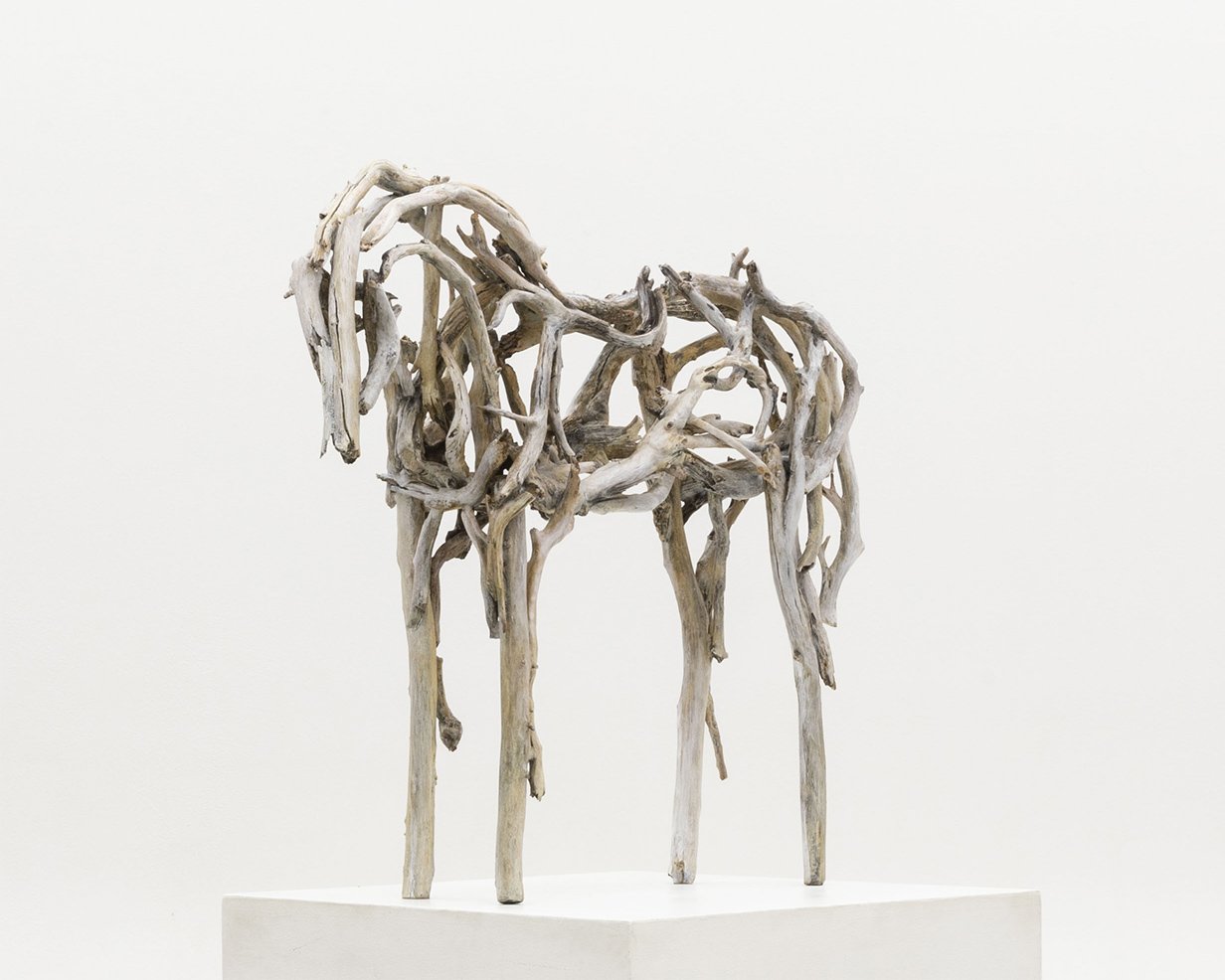
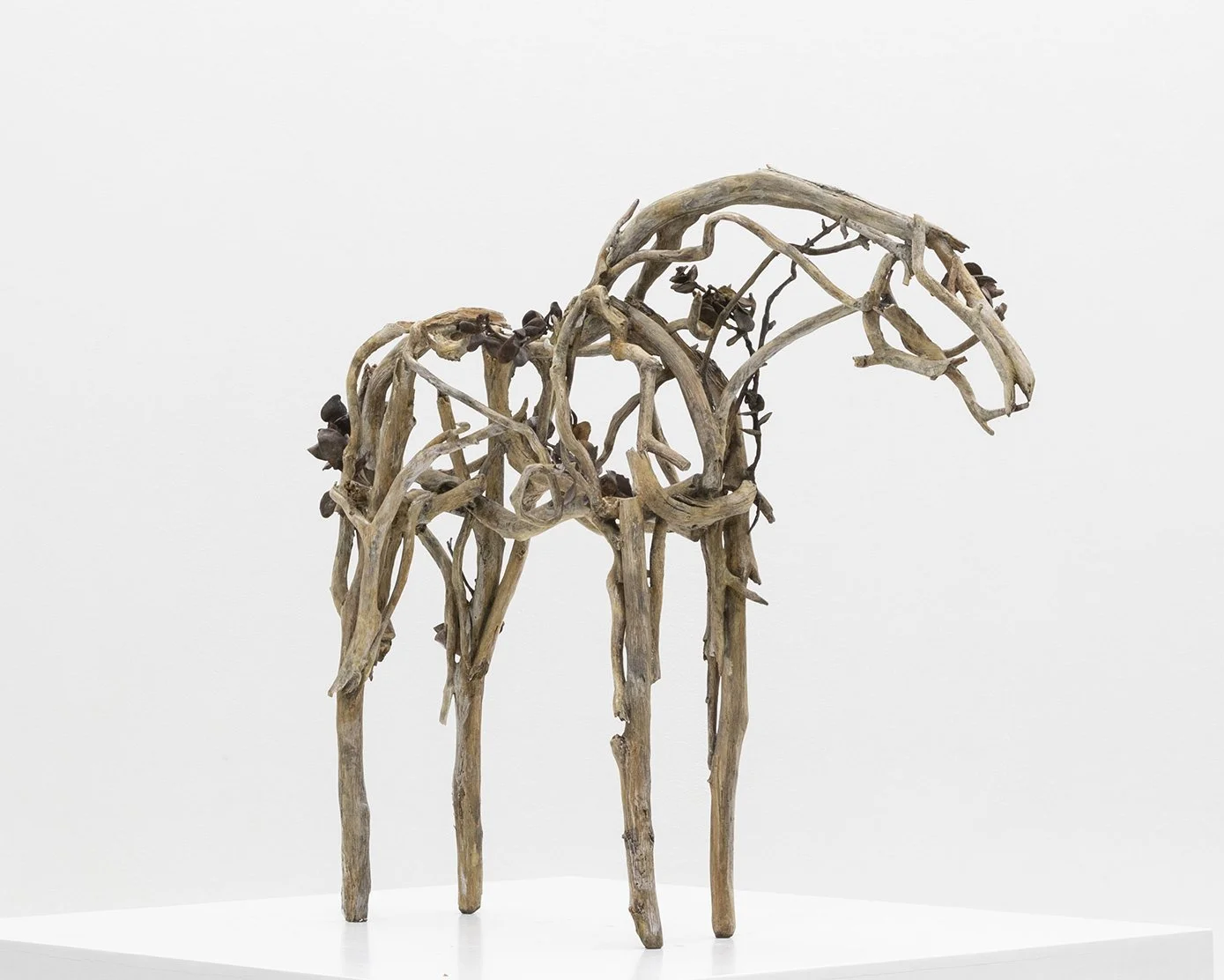
Named for the mountain near Cody, Wyoming, HEART MOUNTAIN draws on the layered meaning of its namesake: a striking heart-shaped formation in the landscape and the site of a Japanese American internment camp during World War II. After visiting the site and learning about the lives of those who were incarcerated there, Deborah Butterfield was deeply moved by their resilience, creativity, and commitment to community in the face of profound hardship. The sculpture’s embracing form reflects these qualities, expressing kindness, connection, and the enduring strength of the human spirit.

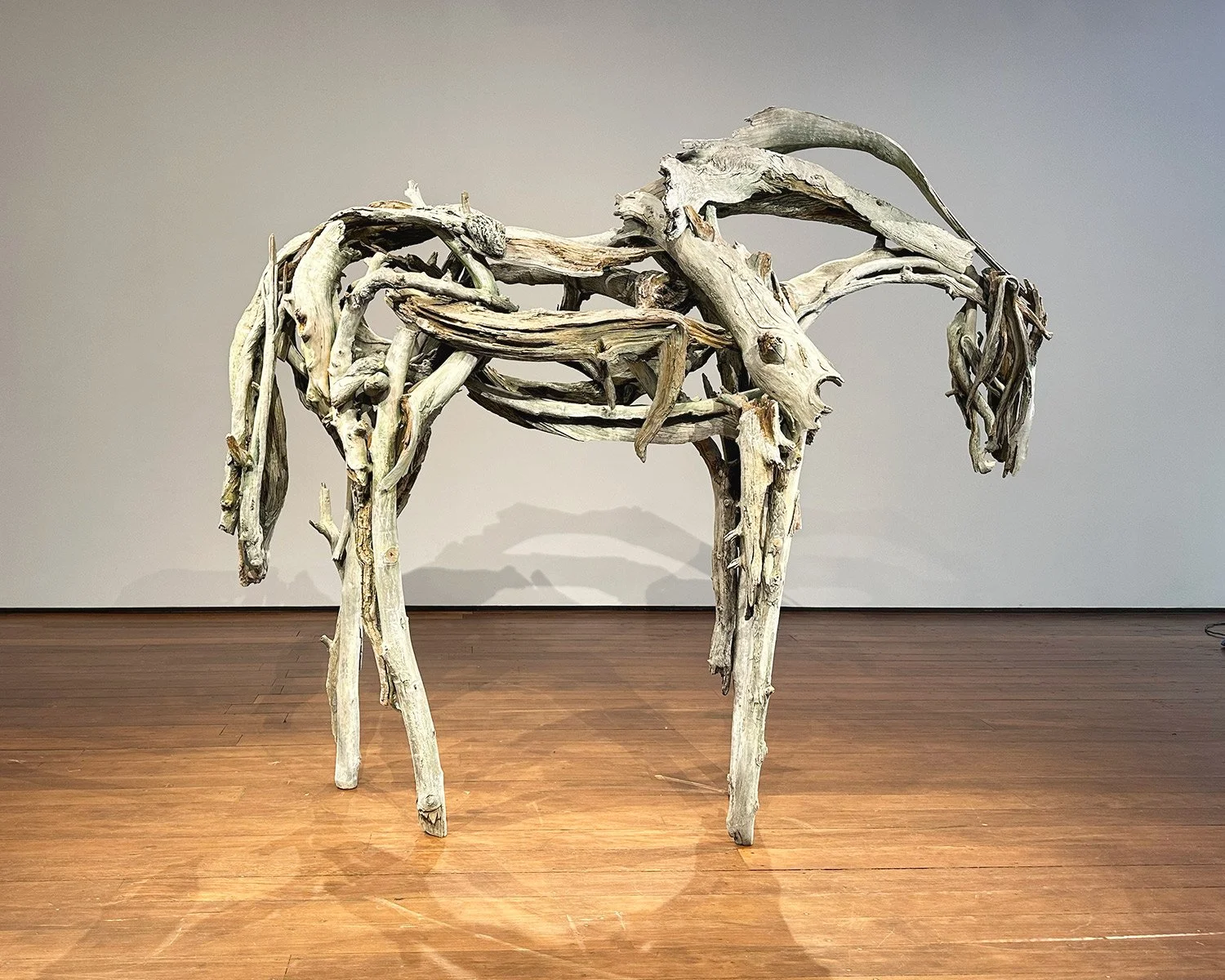
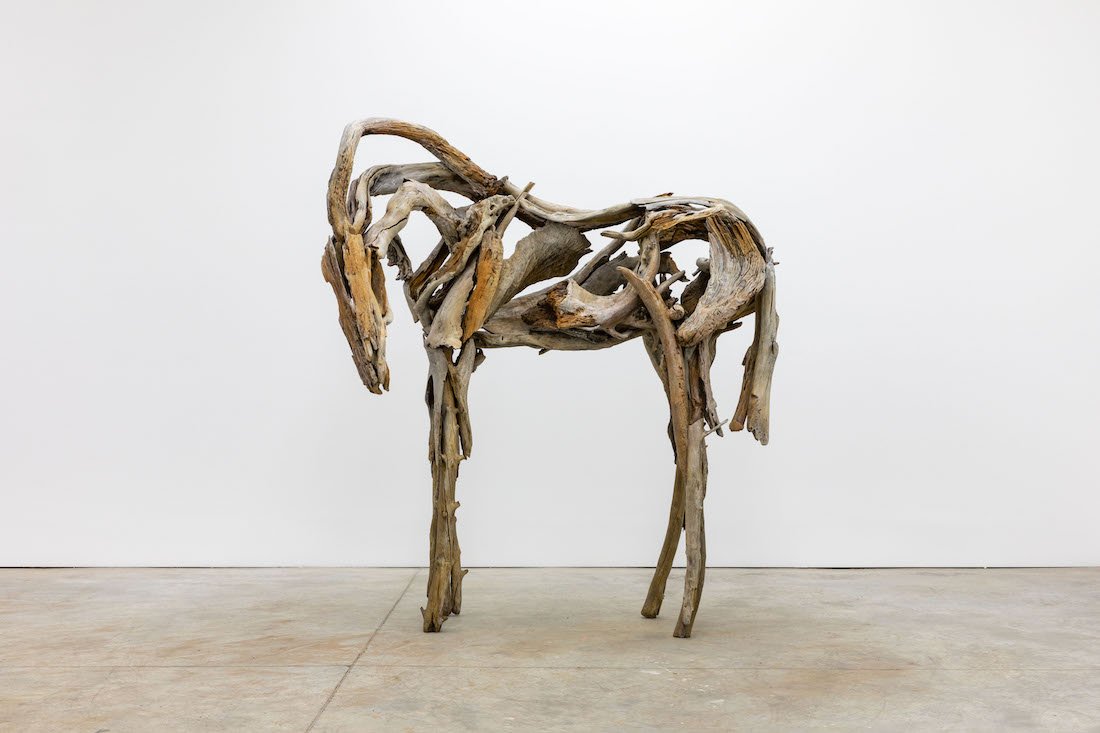
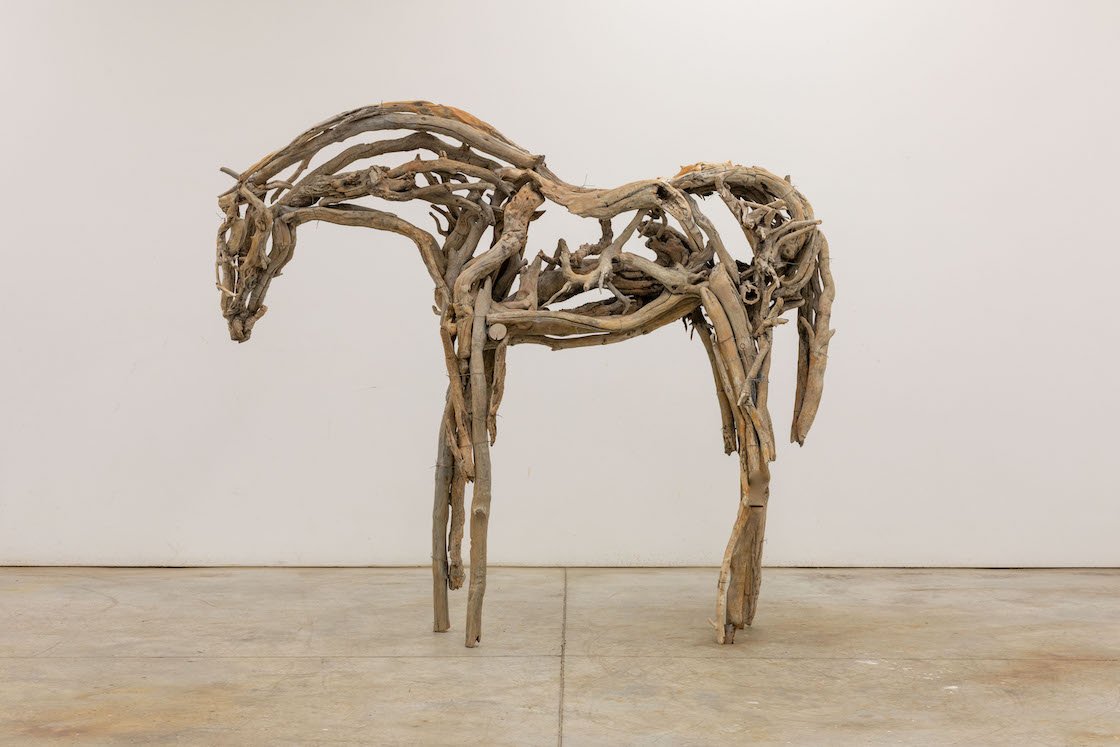
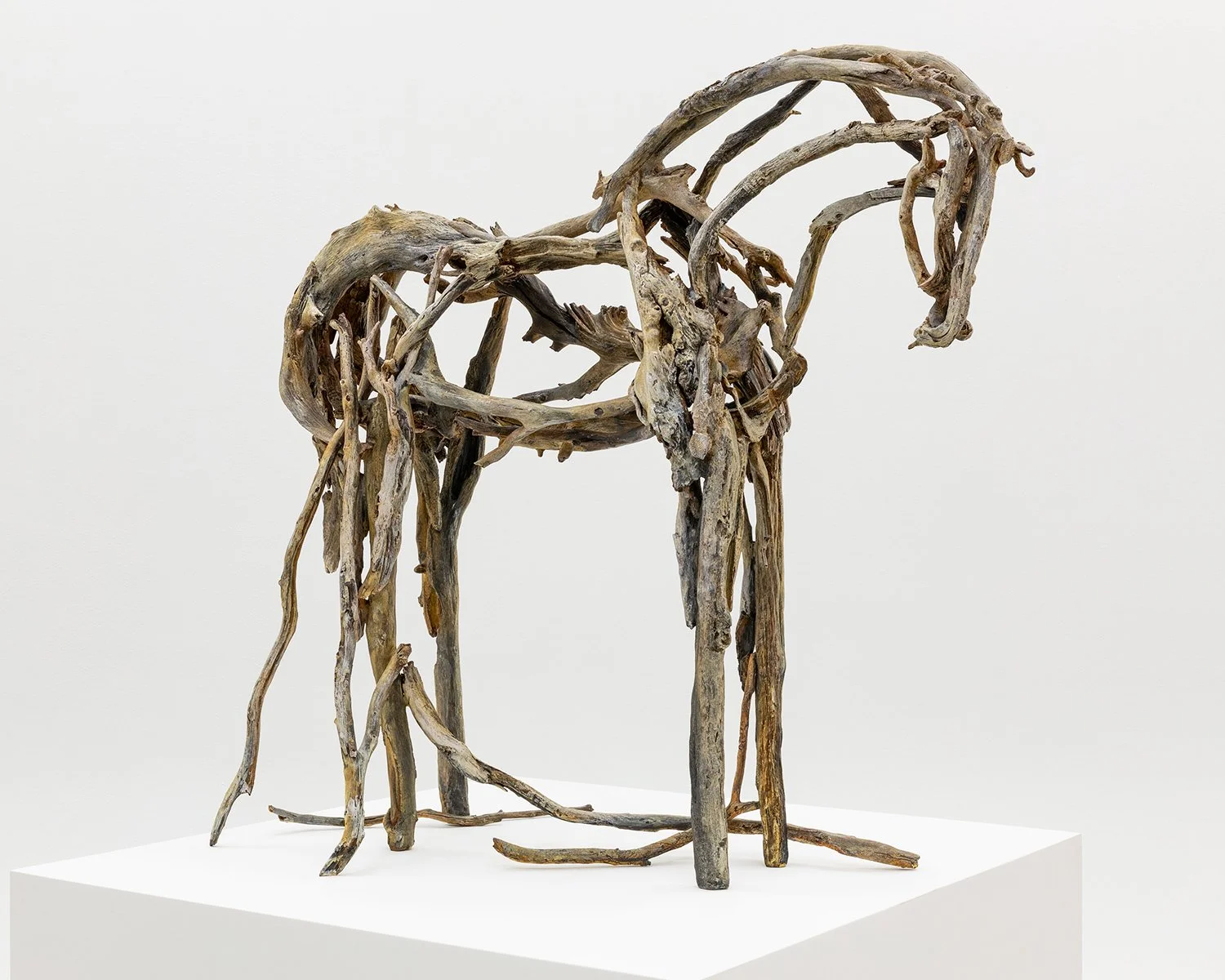
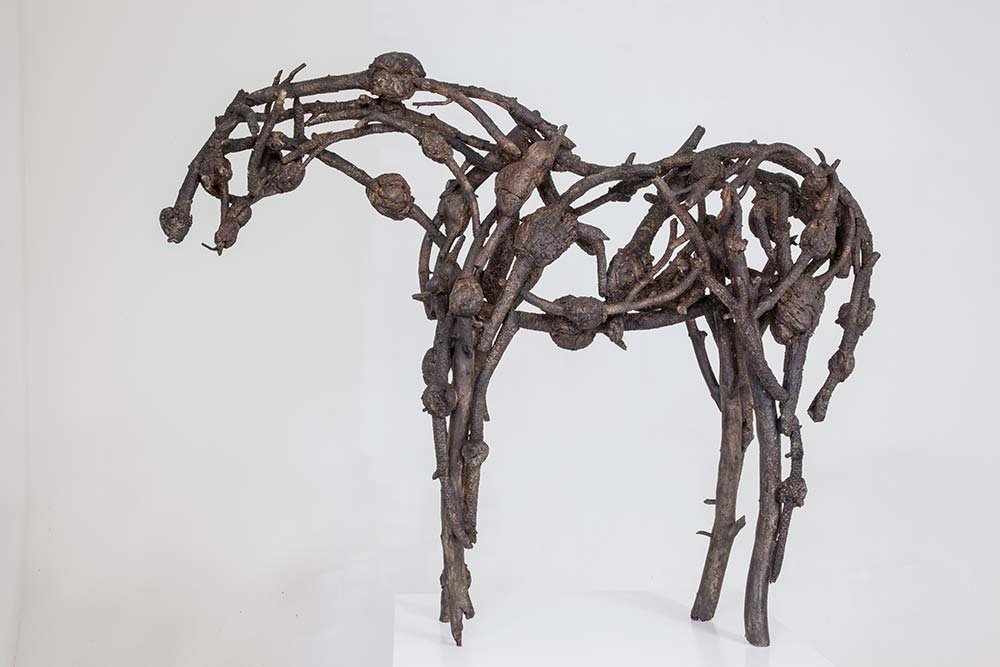
The title for HOPE refers to Ed Keinholz and Nancy Reddin Keinholz's Idaho art gallery, The Faith, Hope and Charity Gallery, from the 1970s. The wood originally used for HOPE is quite varied in comparison to many other large works by Butterfield and, at nearly 8 x 10 feet, is one of the largest works we've had recently. Most of her horse sculptures, are standing works with the head and neck in an upward, even reaching, position suggesting a horse that is alert and paying attention. With HOPE, the head turns slightly, suggesting an inquisitive or inquiring posture.
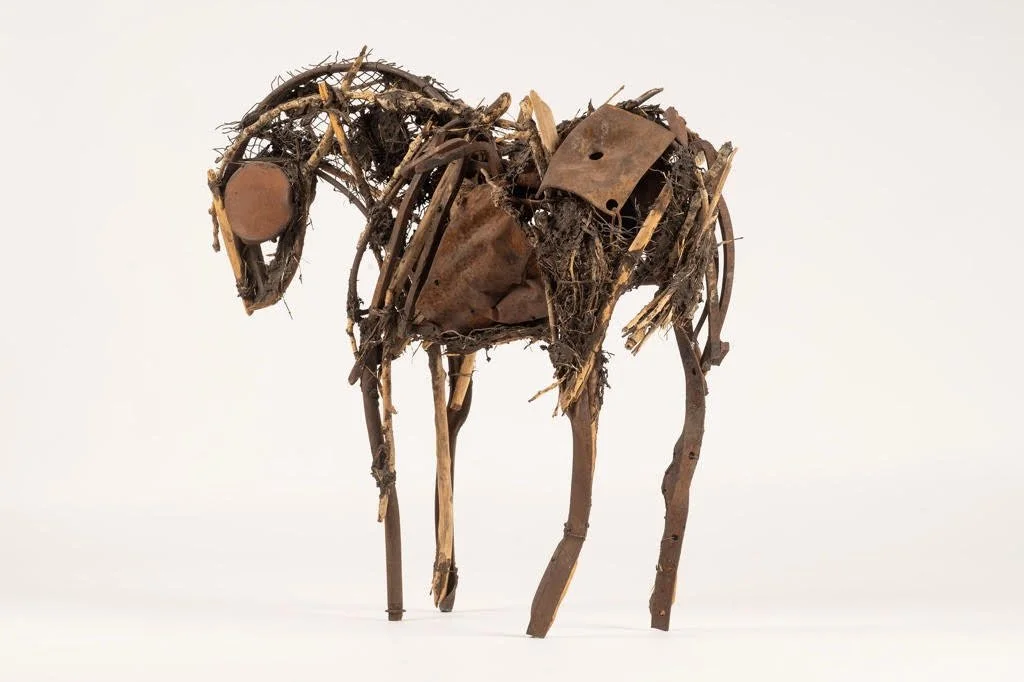
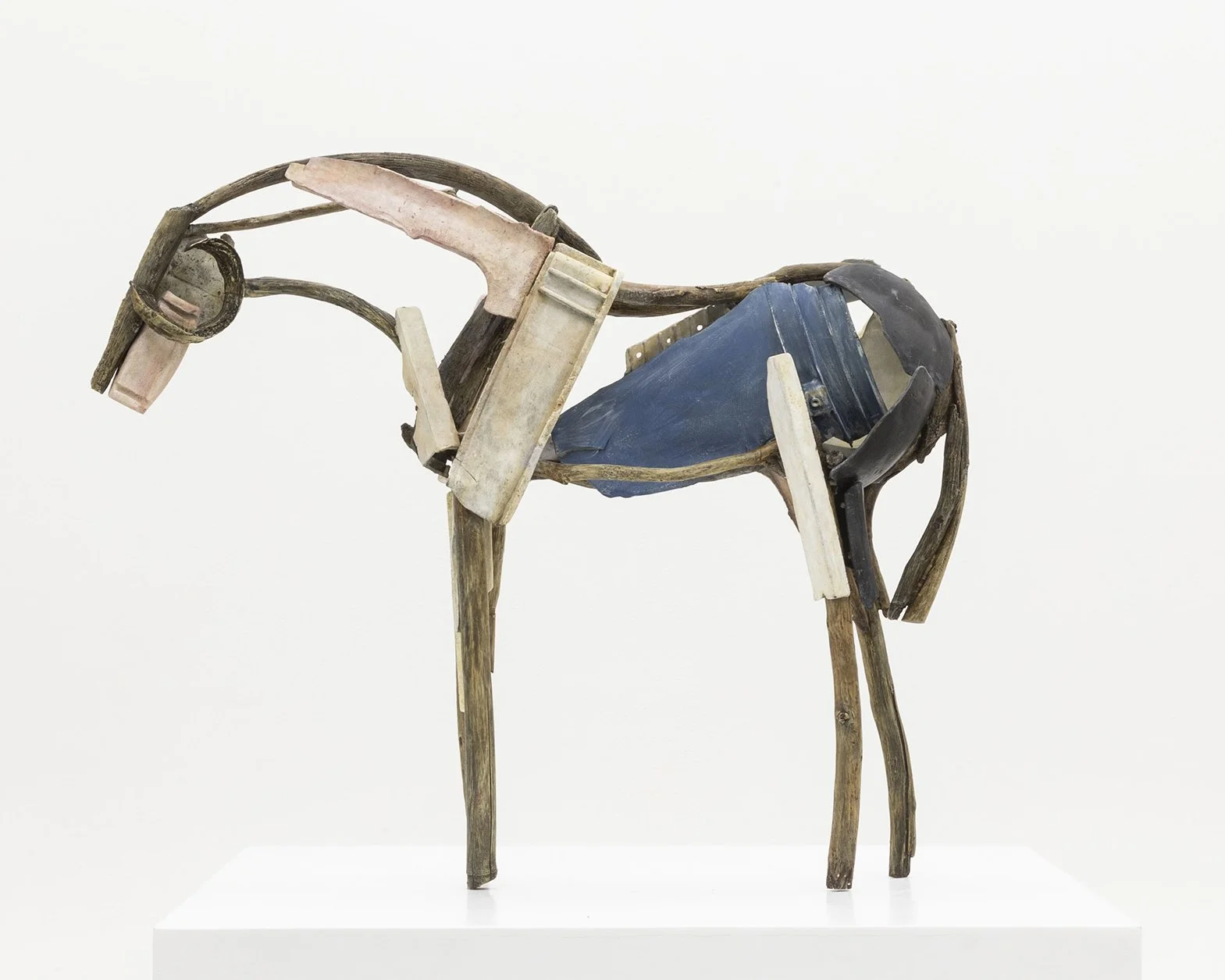
SHIN was made by Deborah Butterfield as a gesture of gratitude and farewell to a mentor. Inspired by the ancient Chinese Tang horses that were believed to accompany the dead into the next world, Butterfield envisioned the horse as carrying a spiritual load for its recipient on his journey.
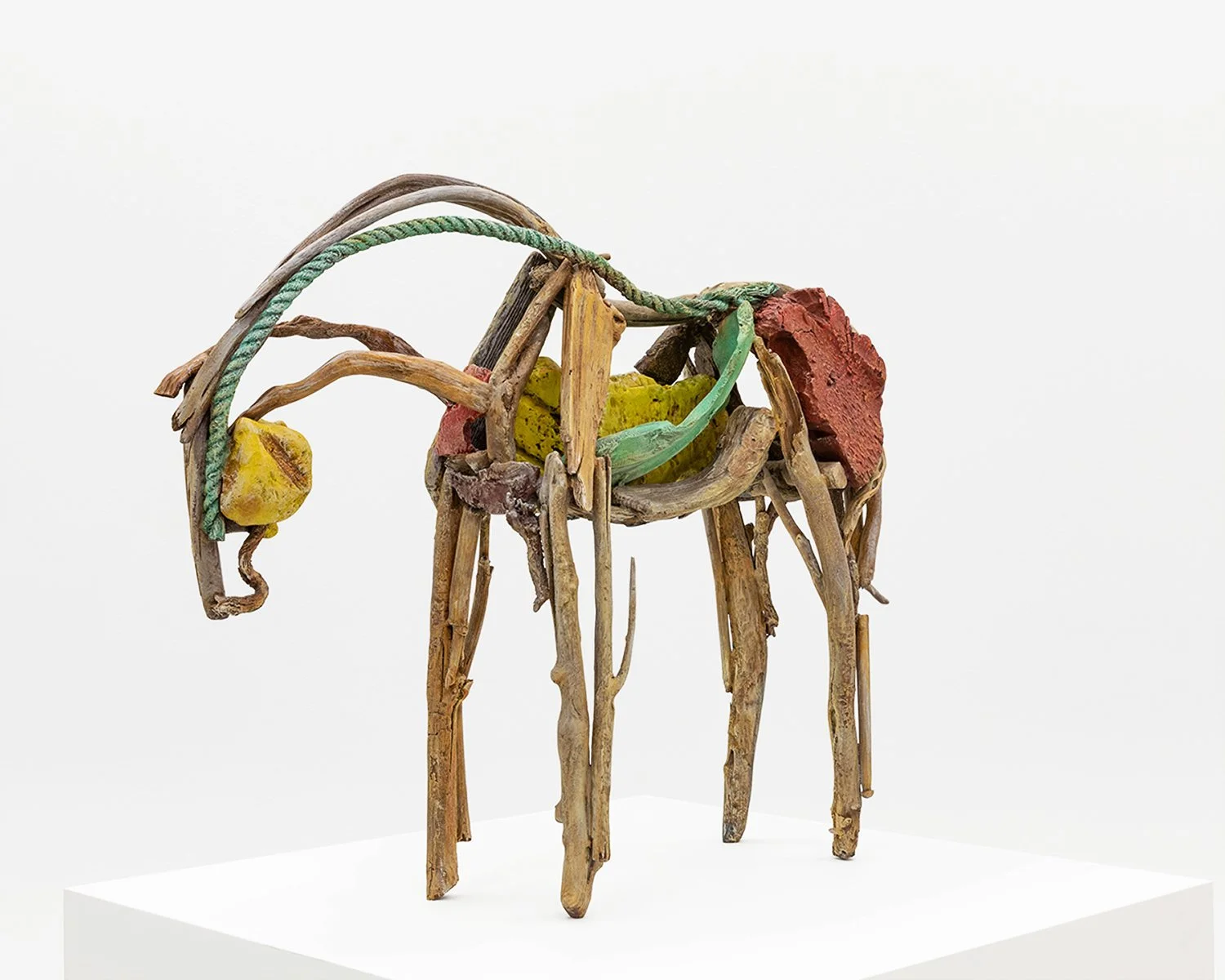
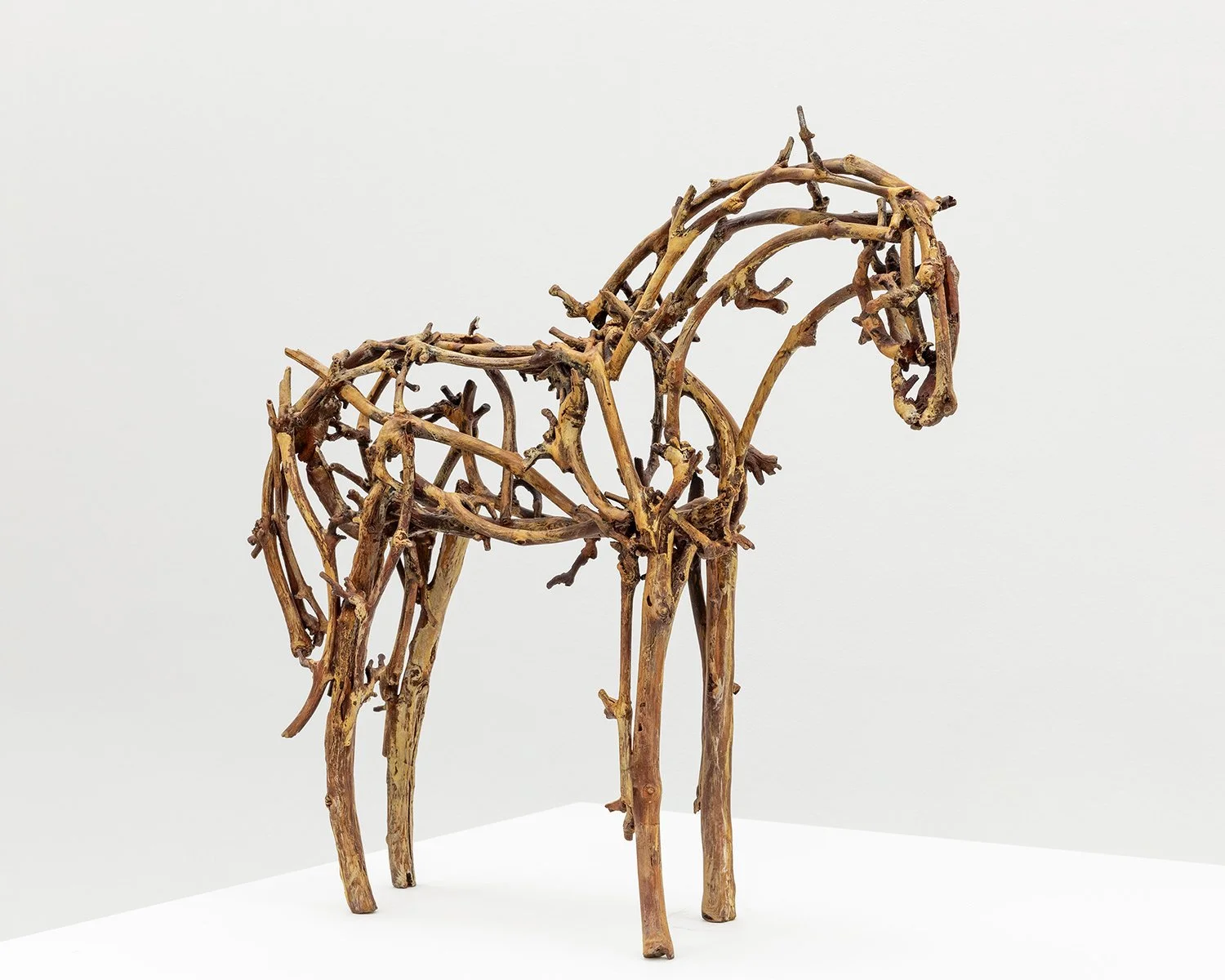
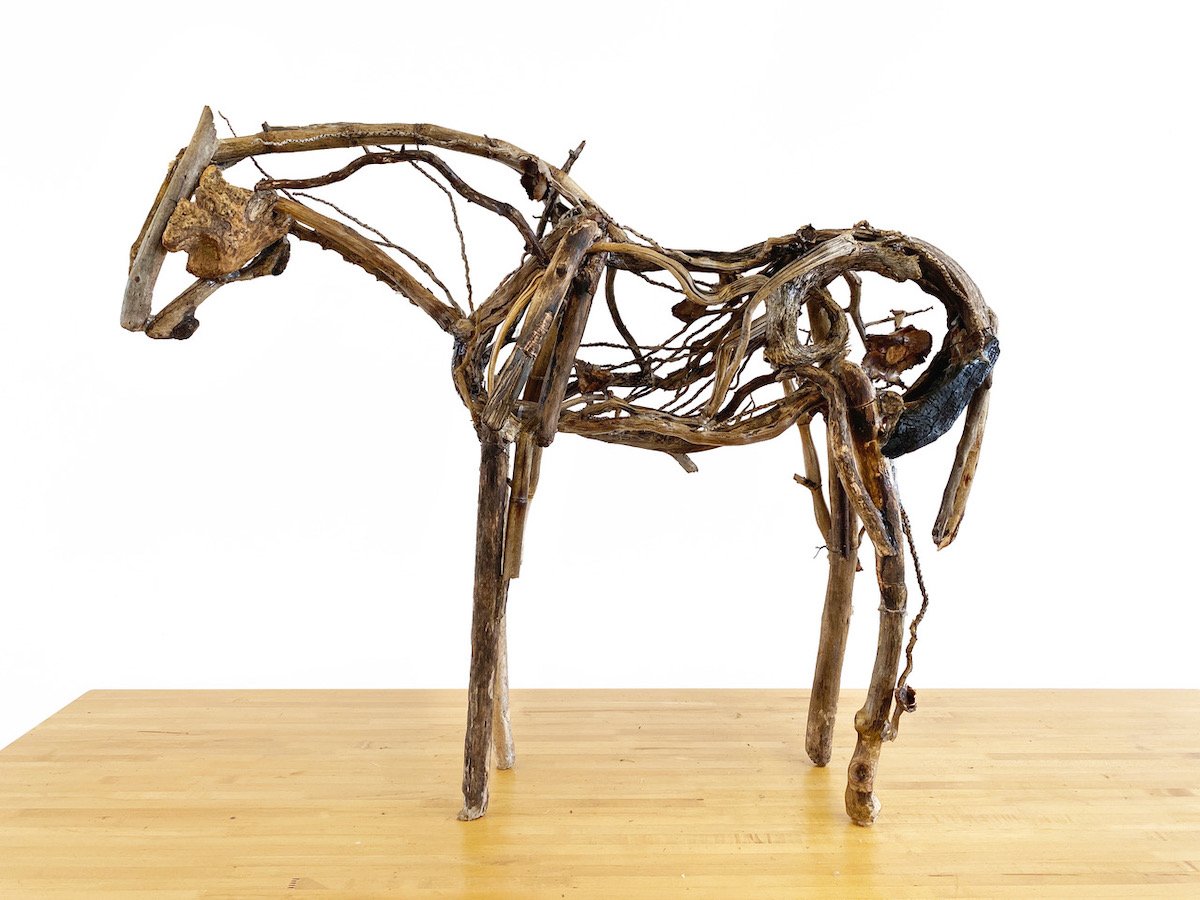
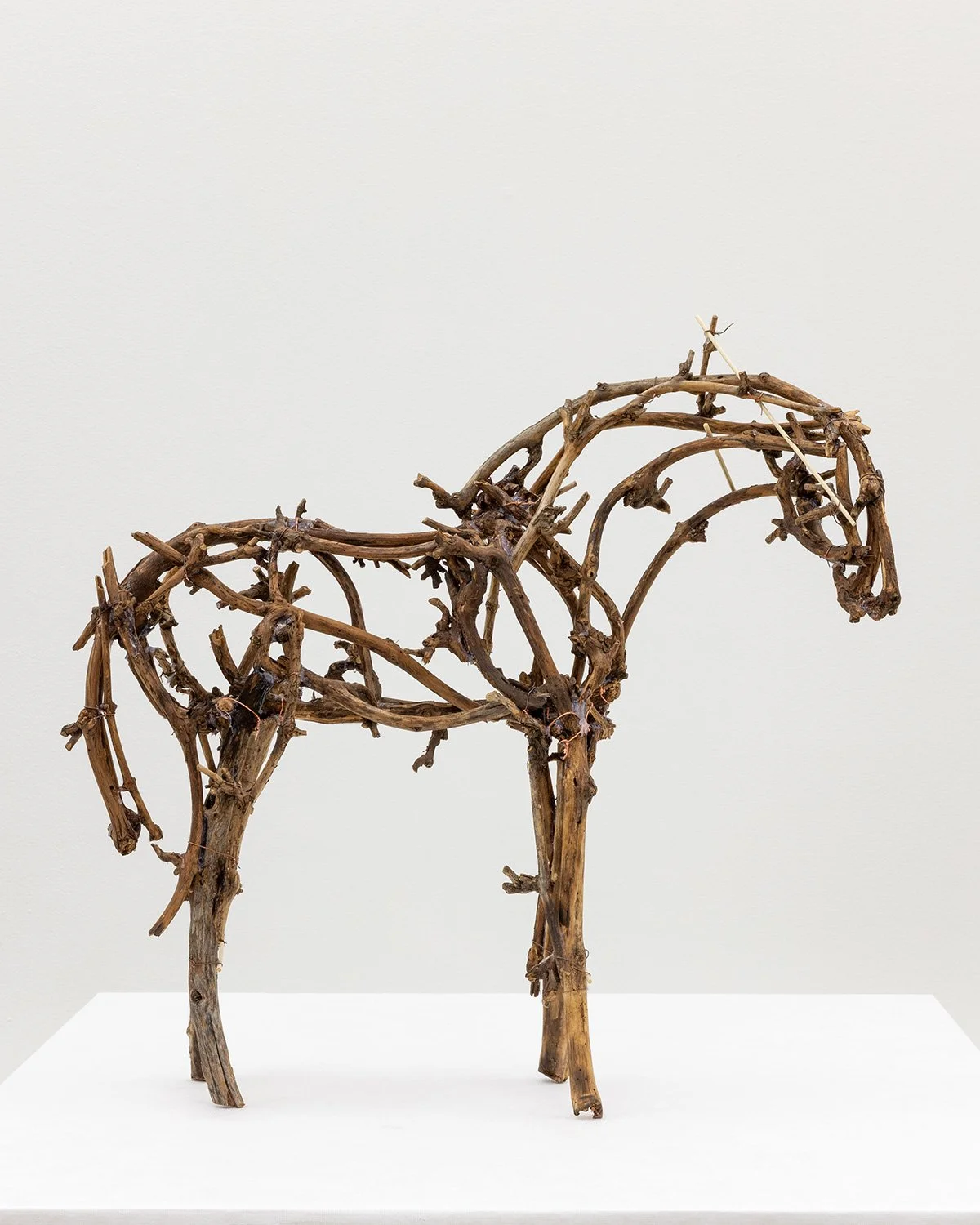
Handmade by Butterfield, SHIN is constructed from sticks, found metal components, and mud—including paper pulp, dextrine, grass, and iris leaves—built around a strong, welded steel armature. The interplay of fragile organic materials and durable metal gives the sculpture both an elemental and enduring presence. Like Butterfield’s early horses, SHIN evokes a creature emerging from the earth, its quiet, dreamlike form suggesting both physical and spiritual passage.
Sold Works
Large Works


Small Works











About
Exhibitions


Sculpture, June 7 - July 26, 2018
Sculpture, September 1 - October 29, 2016
Horses, October 3 - November 16, 2013
Sculpture, June 2 - July 30, 2011
Sculpture, July 3 – August 23, 2008
Sculpture, July 7 - August 8, 2005
New Work, June 5 - August 2, 2003
Horses | bronze and found metal sculpture, July 5 - Ausust 30, 2001
Cast Bronze and Found Metal Sculpture, June 3 - July 10, 1999
Cast Bronze and Found Metal Sculpture, July 3 - August 23, 1997
Horses, October 6 - 30, 1994
New Sculpture, January 2 - February 2, 1992
New Sculpture, December 5 - 24, 1991
-
Deborah Butterfield was born in San Diego, California in 1949. She received her BA and MFA from UC Davis. Butterfield's work has been featured in over 50 museum exhibitions. She has had one-person exhibitions at: Bellevue Arts Museum; Bellevue, WA, Honolulu Museum of Art, Honolulu; Denver Botanic Gardens; Tucson Museum of Art; Figge Art Museum, Davenport, IA; Grounds for Sculpture, Hamilton, NJ; Hunter Museum of American Art, Chattanooga, TN; Lowe Art Museum, Coral Gables, FL; Nevada Museum of Art, Reno, NV and Norton Museum of Art, Palm Beach, FL; San Diego Museum of Art; Tucson Museum of Art; University Art Museum, University of Louisiana, Lafayette.
Butterfield’s work is included in the permanent collections of many major museums, including: The Art Institute of Chicago; Museum of Contemporary Art, Chicago; Baltimore Museum of Art; Brooklyn Museum; Brooklyn Museum; Honolulu Museum of Art, Honolulu; Dallas Art Museum; Denver Art Museum; Israel Museum, Jerusalem; Metropolitan Museum of Art, New York; Milwaukee Art Museum; Museum of Contemporary Art, Los Angeles; National Gallery of Art Sculpture Garden, Washington, D.C.; Nelson-Atkins Museum of Art, Kansas City, MO; Palm Springs Museum of Art; San Diego Museum of Art; San Francisco Museum of Modern Art; Seattle Art Museum; Walker Art Center, Minneapolis; and Whitney Museum of American Art, New York.
The artist was a recipient of the 2022 Lifetime Achievement in Contemporary Sculpture Award from the International Sculpture Center.
Deborah Butterfield's solo exhibition, "Deborah Butterfield: P.S. These are not horses" at the Manetti Shrem Museum of Art continues through June 24, 2024.
-
CAST BRONZE SCULPTURE
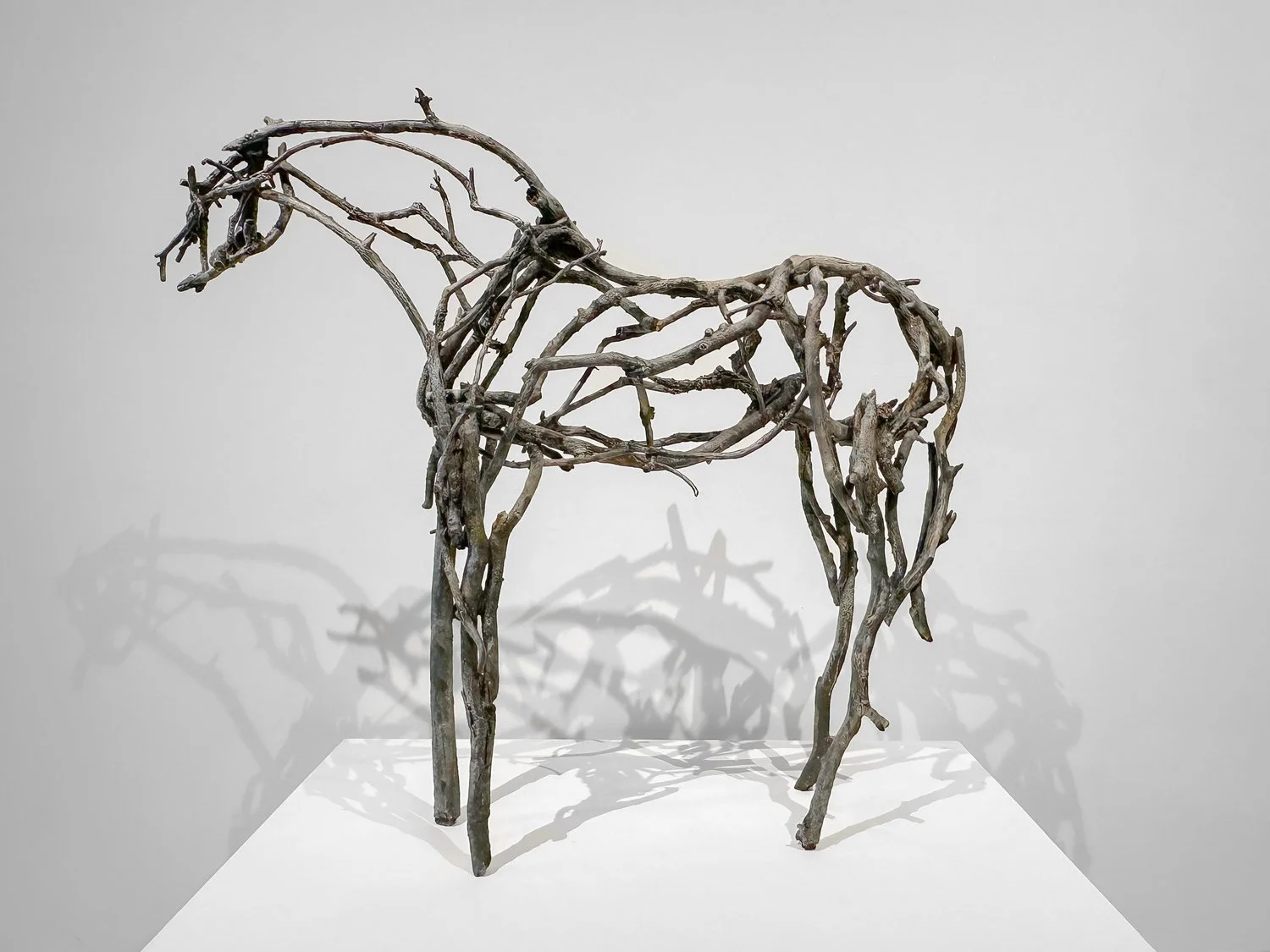
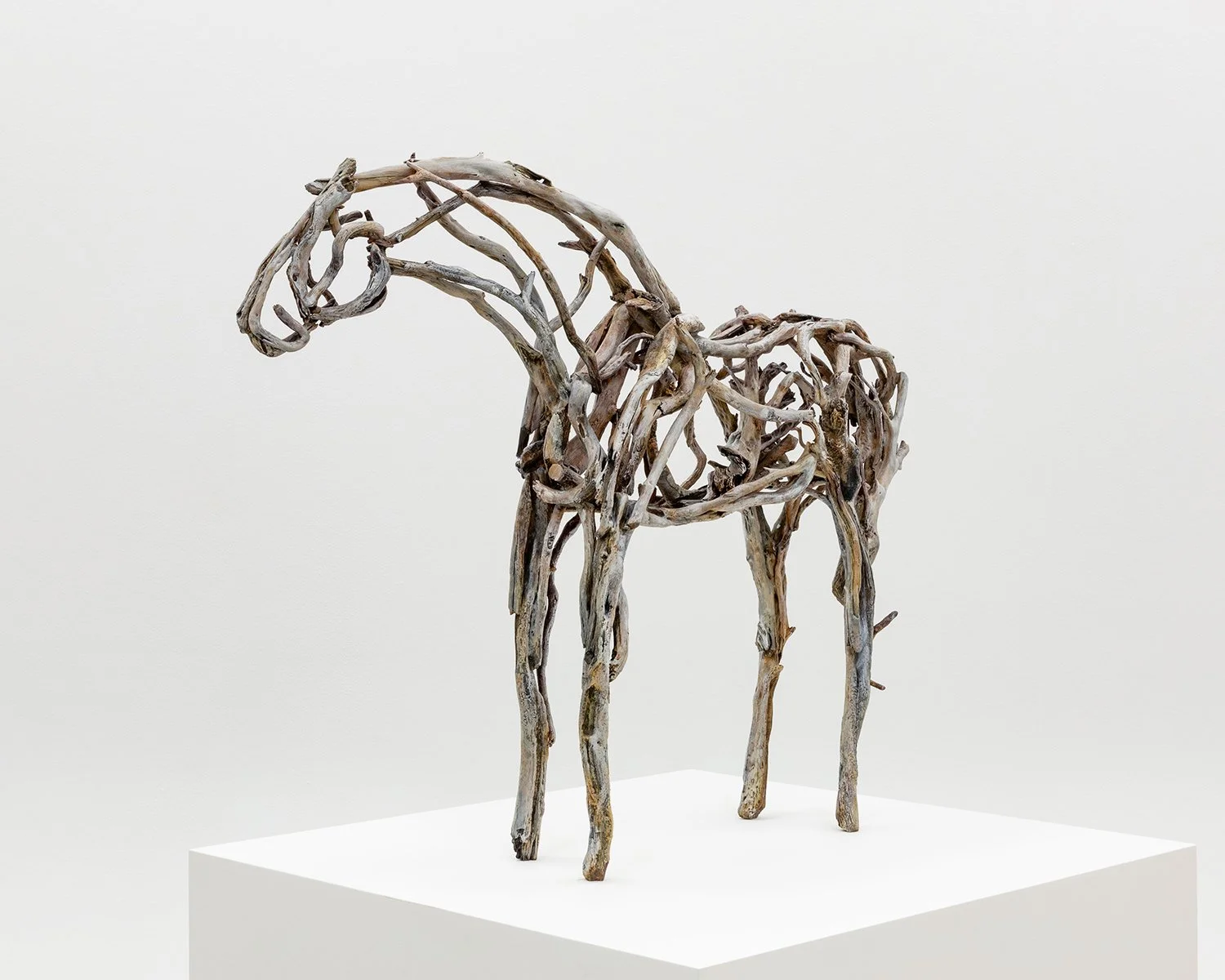
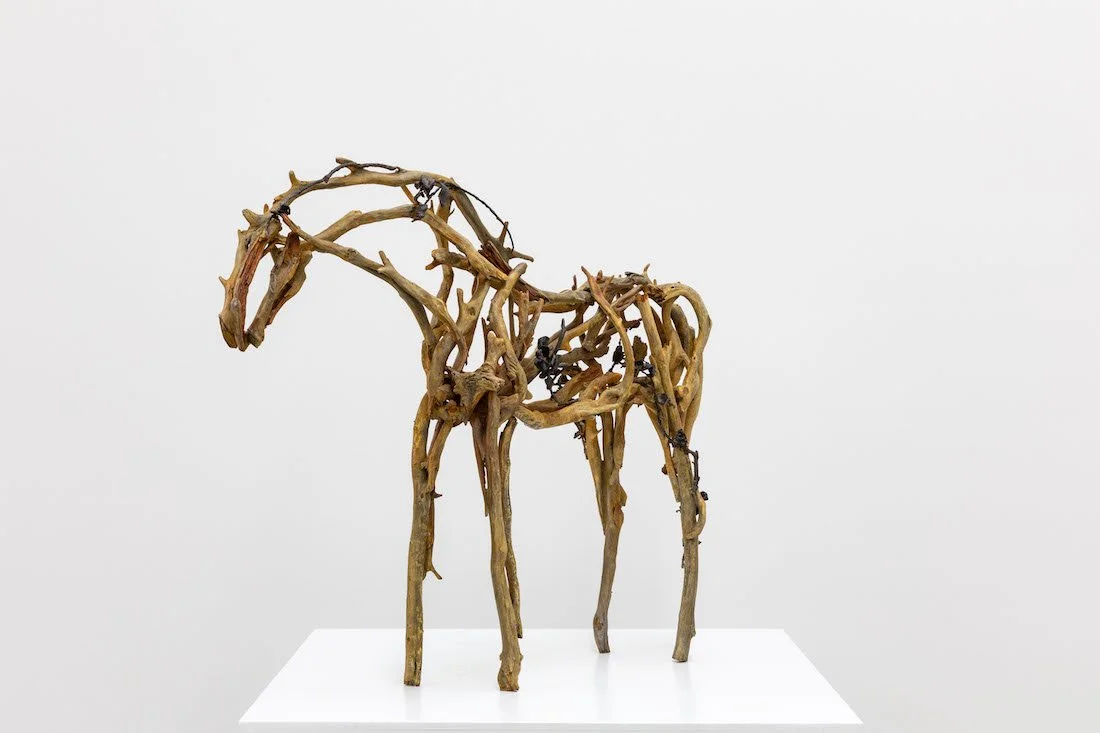
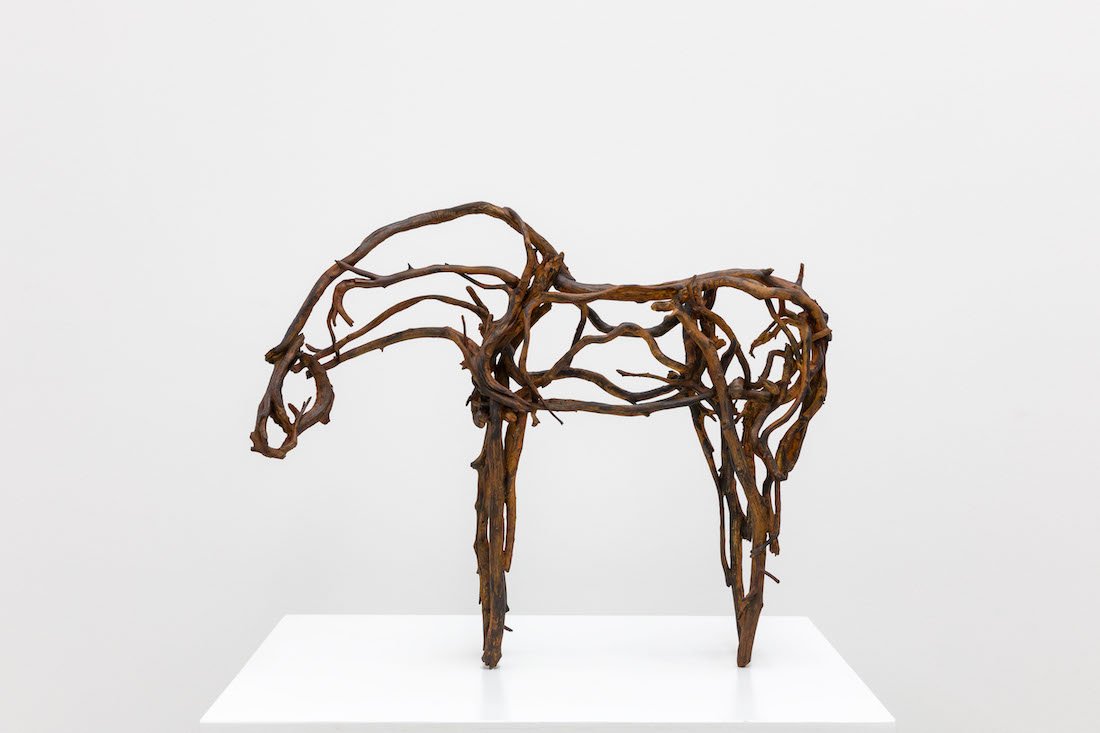
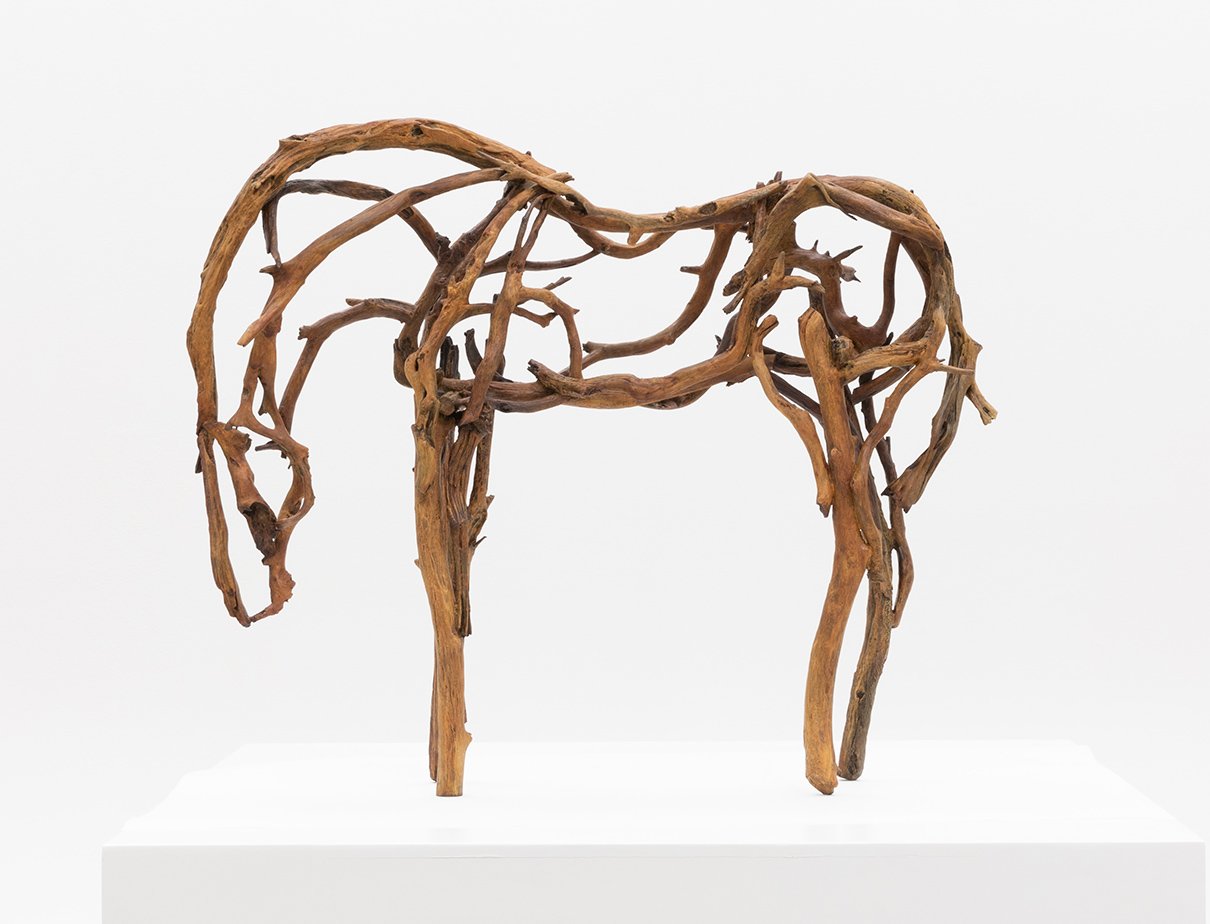
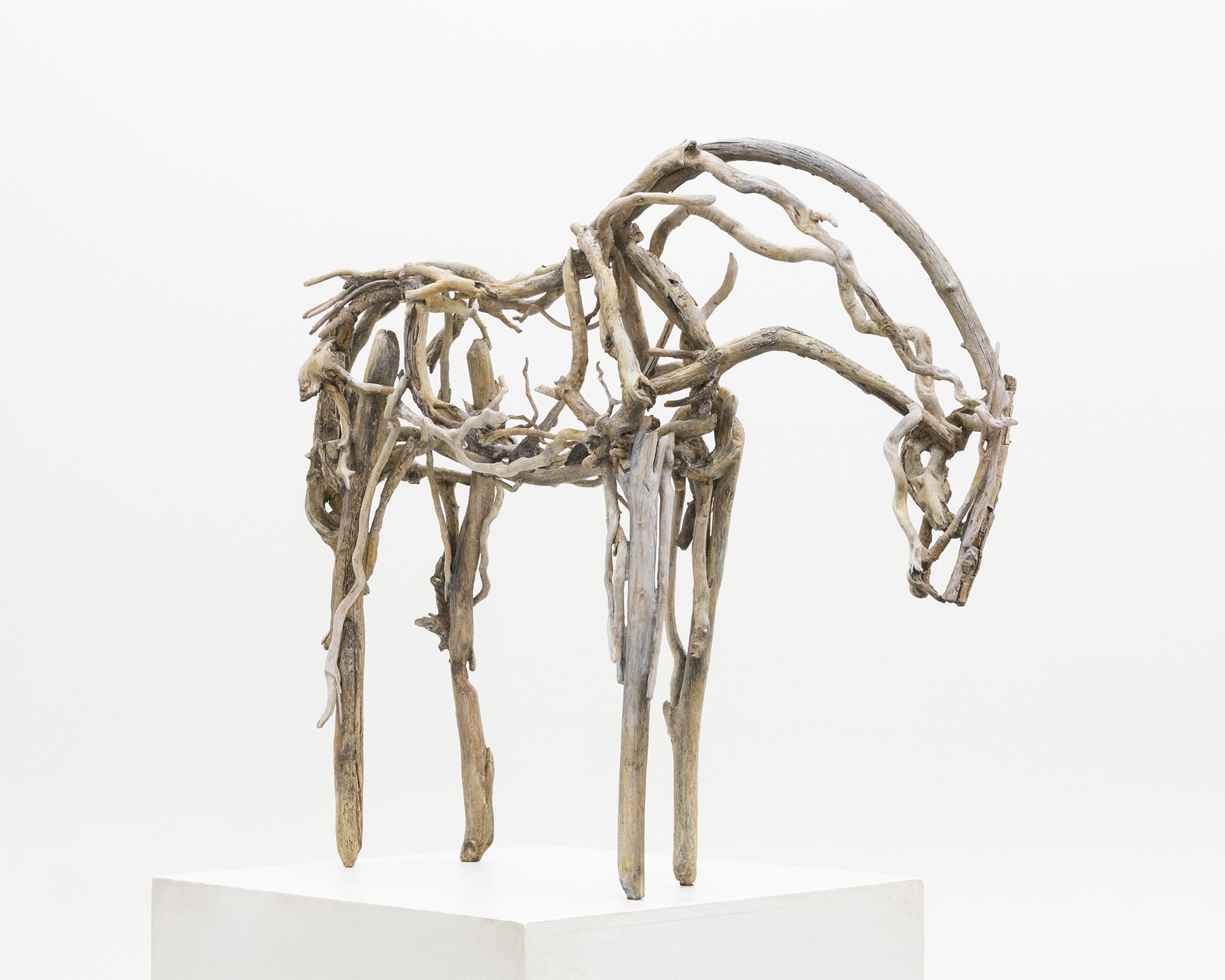
Butterfield has been creating life-size horses from sticks and plant material from which she creates a casting in bronze at the Walla Walla Foundry in Washington State. These large horses have been the subject of several public outdoor commissions and are generally slightly larger than life size. Furthermore, being made of bronze, they have the ability to be placed out of doors.
Butterfield sculpts the original piece by piece by fastening logs, branches, sticks, planks, and boards onto an armature that gives the basic posture of the particular horse. After fashioning the horse out of wood and organic material, the piece is photographed from all sides and angles, particularly the areas where individual pieces are joined. These photos are used to reconstruct the various elements after casting.FOUND METAL SCULPTURE
In the 1980s Butterfield began building full-size horses from found metal salvaged from scrap yards. While the unevenly rusted surface of the found metal work suggests the coloring of types of horses - an appaloosa, chestnut or perhaps a dapple-gray - Butterfield is not obsessed with replicating any aspect of the horse in specific. Nonetheless, in any one of the sculptures, the architectural structure, contour, and mass of the horse are readily apparent. Often, the weighty and crumpled metal pieces used for the shoulders and rump suggest powerful muscles. Carefully choosing from her scrap yard of parts and pieces, she suggests some of the most delicate and surprising aspects of the horse. A massive metal fire escape was twisted into a powerful stallion in a large work that is part of the collection of the Seattle Art Museum. In another work, the curve of an industrial part suggests the neck and mane of the horse in a most uncanny way.
Many of the recent works are made of found metal; most of it bearing colored paint remnants from its original surface. The artist collects metal from wrecked cars, industrial salvage yards, demolished buildings and construction sites and combines them in her Montana studio to create these equine sculptures. Some of the works have utilized three-dimensional letters scavenged from commercial signage bringing an unexpected new element into play. Butterfield has also recently used painted metal from flat signage.
In constructing her horses Butterfield tries to alter the "as found" shape of the metal pieces as little as possible. The separate parts are not often individually important but gain an elegant context in the artist’s ability to meld them into such a suggestive sculpture. Occasionally, recognizable elements such as a child's tricycle can still be identified within the tangled assemblage of metal parts.
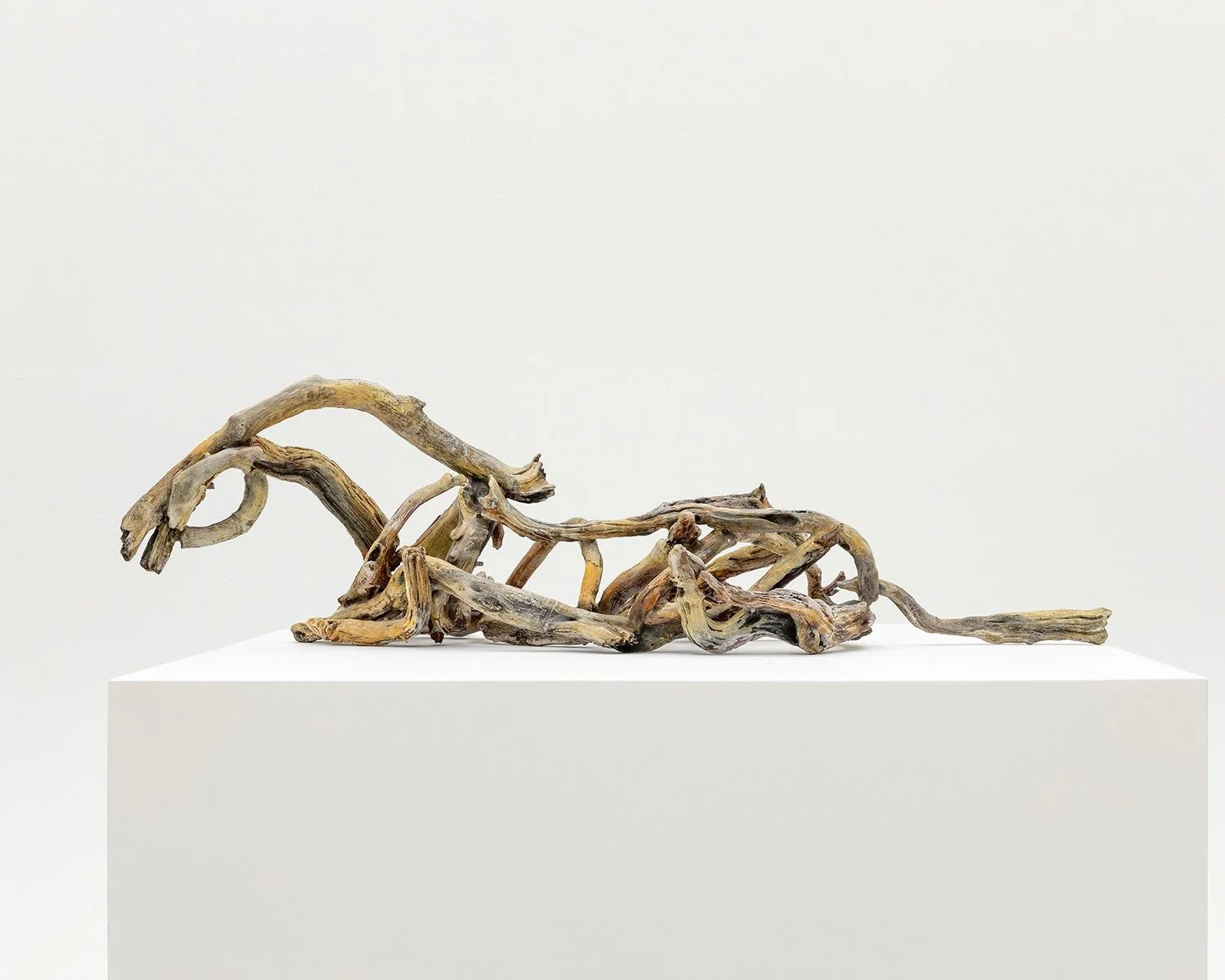
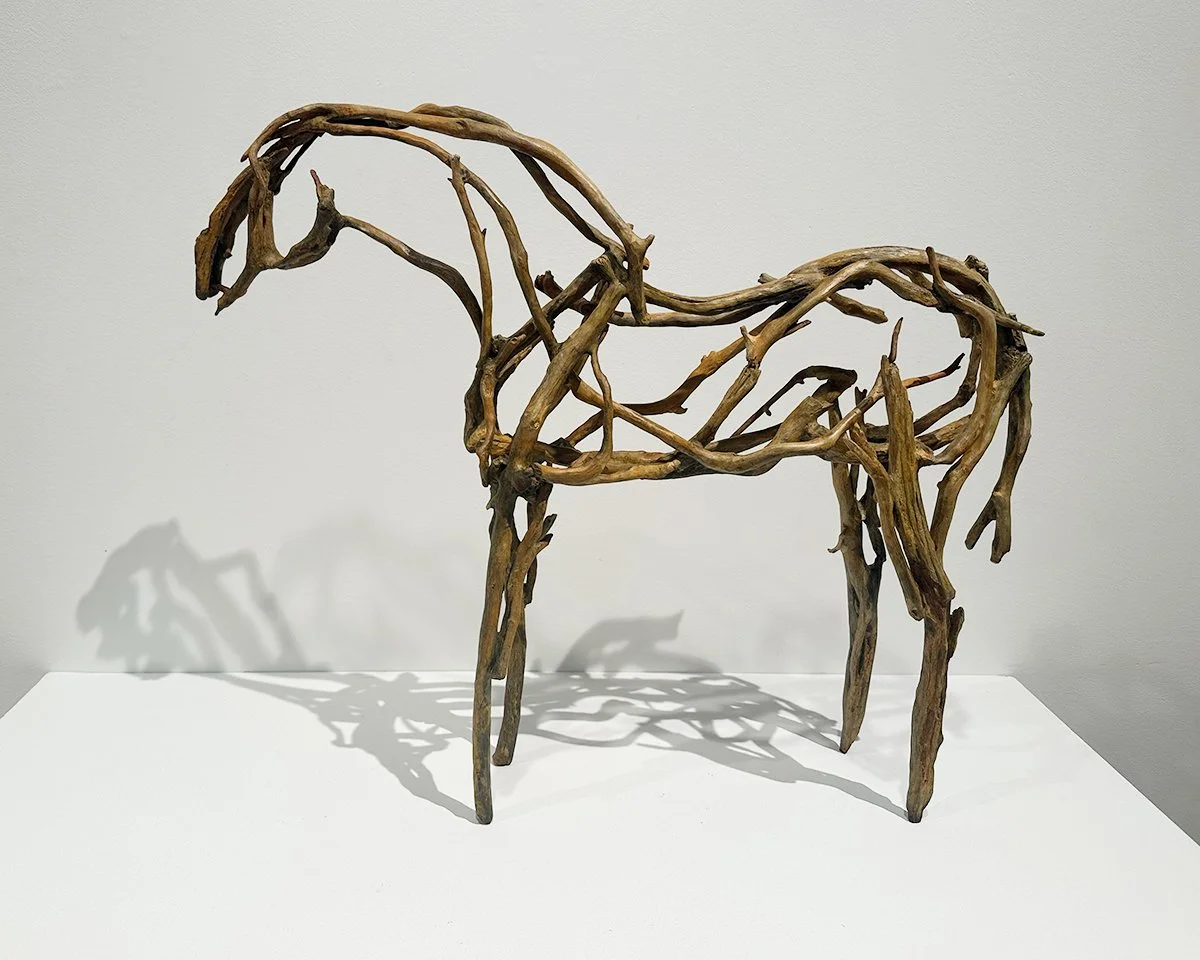
THE SMALL HORSESButterfield’s small sculptures measure roughly three feet tall by four feet in length, a size that the artist relates to ancient Chinese ceramic sculptures of the Tang Dynasty. They are not intended to be seen as colts or as baby horses, but as miniatures relating to artworks depicting horses. Butterfield has never been interested in the naturalistic depiction of horses in the common sense of realism in the art world. She prefers that her small works be viewed on pedestals to alleviate any confusion as to her intention regarding the abstract nature of her sculpture.
-
-
January 7, 2024
The Square Cylinder
Deborah Butterfield at Manetti Shrem
by David M. RothJune 9, 2011
The Seattle Times
Review: Deborah Butterfield's contemplative horses at Greg Kucera
by Gayle Clemens
ART REVIEW Friday, July 22, 2005
Butterfield's horses exude her unbridled love for the equine By Judy Wagonfeld
From The Seattle Post-Intelligencer
Deborah Butterfield is obsessed with horses.When away from her Montana ranch, she imagines them in cinematic perspective, inflated by memory. Upon returning home, their actual size always surprises her.
We've all experienced this phenomenon about people or places we treasure. And it's this essence -- an epic love, awe and respect that Butterfield portrays. Unbridled from specific roles, her mares and stallions bear humble, serene demeanors.
It is impossible to enter Butterfield's exhibit at Greg Kucera Gallery without being wowed. You almost trip over "Habitat," a 10-foot-long horse sprawled at the door. Muscles as relaxed as a human's after yoga, he sinks into the ground. Towering behind, "Hermit" and "Touchstone" stand hands higher than real horses. Seemingly wrought of broken branches and crusts of bark, they look precarious. But, as in trompe l'oeil paintings, appearances trick the eye. Sturdily cast in bronze, they will last for ages, modern day iron and Trojan horses that inhabit worldwide museums, public spaces and private grounds.
Butterfield developed her faux-wood approach at the Walla Walla Foundry in Eastern Washington because her early stick-and-mud horses had deteriorated -- distressing art collectors. The wood shrank, wires loosened, dirt disintegrated and bugs attacked. Tiring of a secondary "veterinary art restorer" career, she sought permanence for her ephemeral sculptures. In the labor-intensive solution she documents and disassembles her wood horses, makes a mold for every stick, burns out the wood and pours in molten bronze. After reassembly, patinas restore nature's hues.
In a simpler process, Butterfield welds steeds from industrial and farm discards. "Rosa" (standing) and "Redhead" (lying) of weathered orange steel appear frail and vulnerable; remnants paying homage to pre-industrialization's hero. In colt-size versions, Butterfield switches allegiance, honoring the Tang Dynasty's revered and miniaturized horses.
Regardless of material or size, Butterfield's loose, lyrical lines suggest X-ray views of sleek equine bodies. Coaxing slabs of textured bark, she crafts bulky haunches. Gnarly twigs drape as tails. Tangled roots meander like internal organs. Twisted metal implies a head. Arched steel or branches fashion curving necks, bellies and backs. Outsized legs somehow look right. Positive and negative spaces play off each other like the gestural brush strokes of Susan Rothenberg's horses.
It's easy to connect with these horses. From cave drawings to the present, we know them as friends and helpers. Symbols in American myth, they're lionized in art. Racehorses, broncos, wild mustangs, carriage and work horses rear up, prance, gallop, jump or transport riders. In contrast, this artist's noble horses stand or lie untethered, steeped in blissful primal spirits.
Butterfield began making horses 30 years ago as self-portraits expressing feminist and anti-war concerns. Encouraged by mentor Manual Neri (who, in her mind, had a lock on the female form she preferred to use), she's pursued the motif. Over time, gender and politics mattered less, trumped by passion for the horse itself.
Only a person intimately connected to horses could generate Butterfield's range of subtlety. She's a maestro reinterpreting a symphony, a medic with a sixth sense for diagnosis -- abilities spawned from creativity, discipline and devotion. These same traits propelled her to levels of black belt in karate and grand prix in dressage.
It's this precision that keeps us as intrigued with her art as she is with horses. As President Reagan once said, "There's nothing better for the inside of a man than the outside of a horse." In this case, that applies even to those made of metal and bronze. In poetic lyricism, Deborah Butterfield's extraordinary sculpted horses rank with the Australian masterpiece "The Man From Snowy River." Like that sweeping epic of love, life and horses, their primal compelling presence gets under your skin.
Paradoxes of power and vulnerability, these huge beasts loom humbly in Greg Kucera Gallery. Appearing patched from bark, branches and twigs, they seem in danger of collapse. But all is not what it seems. Fragility obscures inner strength. Ambiguity hides reality. And just as the industrial revolution swapped a living, breathing animal for the Iron Horse, Butterfield metamorphoses sticks into bronze.
Without a blueprint, Butterfield coaxes and ties forest fall into divine equine elegance. Documenting and disassembling, she casts each segment, burning out the core and pouring in molten bronze. After reconstructing the horse's body, patinas restore the original wood's earthy palettes.
The illusion stuns viewers. Beyond that, Butterfield's artistry of form energizes this show's eight bronzes and two colorful, found metal assemblages, sending a visceral hit. An arched spine, cocked head, hip sway or tail swoosh conveys elusive gestural nuances she garners while raising horses and training them in dressage.
Despite Butterfield's 30-year focus on horses, each bears a unique persona established through degrees of openness, chaotic versus sleek curvilinear lines, and size. While the smaller 3- to 4-foot versions pay homage to ancient Chinese miniature sculptures, the 7-foot Goliaths hover like domesticated, blissful Mother Earths awaiting instruction.
As in life, the most protected often lie at risk, their vulnerability as exposed and penetrable as Butterfield's lattice shelled creatures. Metaphorically, the horses represent her, as well as the female species; nobility woven from fragile pasts and primed exquisitely for treasured dreams.
- Judy Wagonfeld
Unique cast bronze
80 x 77 x 38 inches
Price on request